

What Does a Climate Writer Do During a Crisis? –– “Join Up.”
Climate writer and educator, Nancy Lord, navigates the climate crisis by taking action.

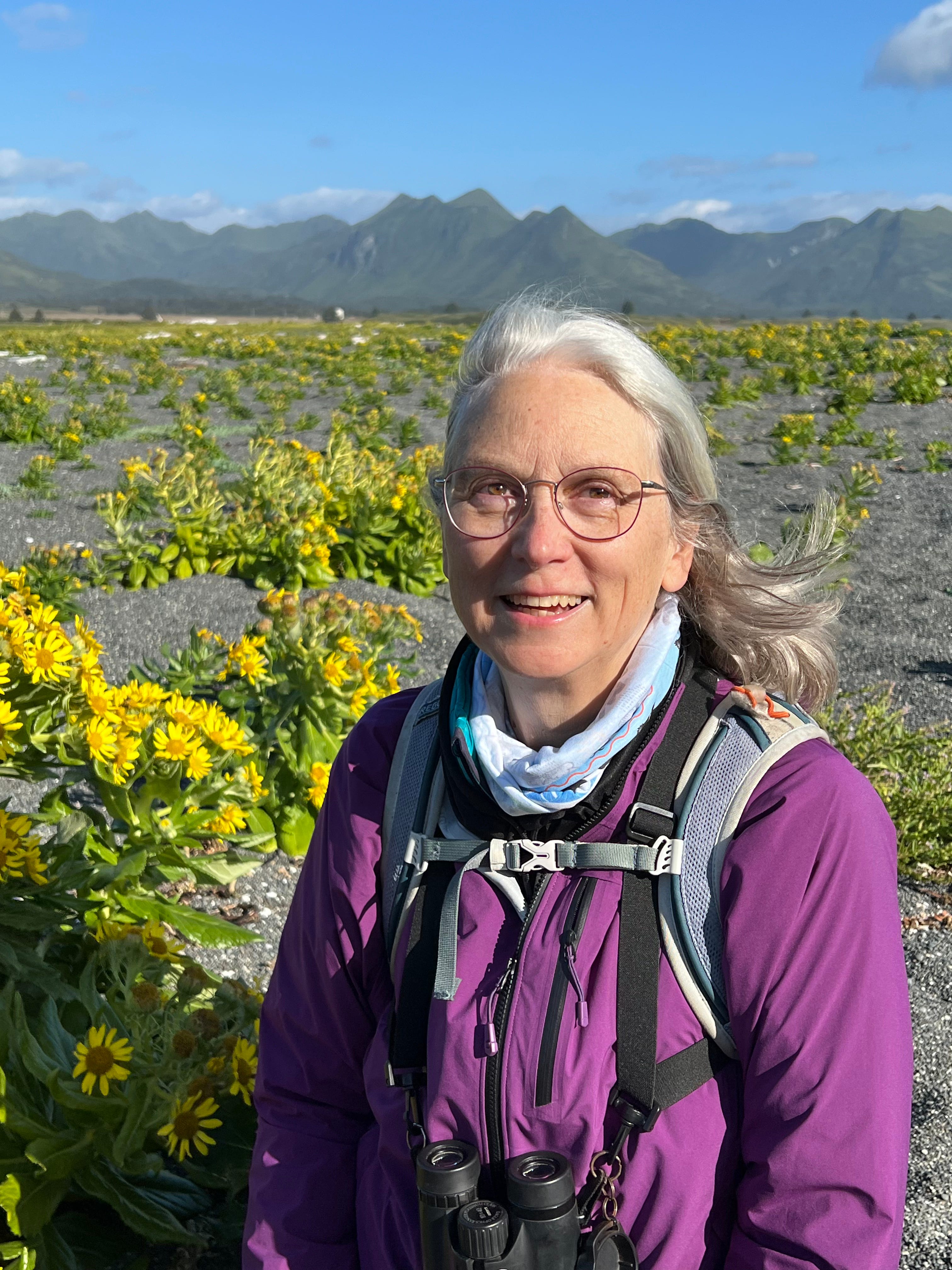
Nancy Lord is a writer and educator who lives in Homer, Alaska. Her writing focuses on climate change, specifically in Alaska. As an educator, she teaches writers how to communicate this crisis effectively. Lord is also the author of eight books and was the Alaska State Writer Laureate from 2008 to 2010.
Originally from the Northeast, Lord moved to Alaska in 1973 after falling in love with the land on a post-college visit. She is on the board of the Friends of Alaska National Wildlife Refuges, advocating for the protection of the Arctic National Wildlife Refuge (ANWR). The 19 million-acre stretch of protected lands in northeast Alaska is home to a vast array of wildlife, including black, grizzly, and polar bears; the Porcupine caribou; muskoxen; wolves; Dall sheep; moose; and arctic foxes. It is also an important location for various migratory birds and salmon species and is home to the Iñupiat and Gwich’in people.
ANWR was initially protected in 1960 and has been continually up for debate ever since, as it is now the largest national wildlife refuge in the United States and is also rich in oil. On October 1.5 million acres were opened up for drilling in the refuge.
In a follow-up email, Lord said, “I would say that these days, instead of writing about climate issues head-on, I’m working more indirectly. The more we protect public lands and prevent oil and gas and mining developments, the better it will be for the climate.”
The following interview has been edited and condensed for clarity and conciseness.
Nicole Williams (NW): How did you get into writing about climate change, and what’s your outlook for the future?
Nancy Lord (NL): In Alaska, we experienced a lot of climate change pretty early on, because we’re north and they say we’re warming between two and four times as fast as the world at large. So it’s been really apparent for a long time. I was asked to write something for an environmental anthology about 25 years ago, and at the time, the spruce trees in my part of the state were all dying because of the bark beetle…it just grew from that early one. I wrote the book Early Warming because Alaska was warming faster than anywhere else, and I was trying not to write about the effects of climate change but about responses, hoping that people elsewhere could learn from how Alaskans were adapting and coping with it.
NW: Can you tell me about the work you are doing to protect the Arctic National Wildlife Refuge?
NL: When all of this stuff started going down, all the Trump stuff in general, I thought, ‘What is one small thing that I could do?’ So, I decided to get involved with the Friends of Alaska National Wildlife Refuges, because we have 16 refuges just in Alaska. It’s a huge part of the state. The Arctic Refuge might be the largest, but there are lots of other big and small ones as well. I offered to join the advocacy committee because I was thinking I could write things, and then very quickly I was the chair, and then I was on the board.
The Secretary of the Interior made those announcements last week about really opening up the whole coastal plain. I watched the press conference where all that was announced, and our congressional delegation was just so gleeful about it all. It’s all about their idea of economic development, and other values don’t matter. You get paralyzed. I was just so deflated that I couldn’t do anything for a few days. I was trying to figure out how we would react, and I’m kind of still in that position. Our organization is part of a coalition for the Arctic Refuge, and we have been involved in litigation, and we’ll be doing more…We do a lot of social media to try to keep the public informed about what’s going on, but it’s all related to climate. The caribou migrations need those lands. The polar bears are denning on shore because the ice is gone, and that’s exactly where they’re denning on that coastal plain where they’re going to be drilling.
NW: What’s the feeling from Alaskans after the announcement of the drilling?
NL: Alaska is a funny place. You see bumper stickers in favor of climate change because they want warmer weather. Most Alaskans are in favor of economic development. So our congressional delegation is really representing a majority of Alaskans who want to open up lands widely for economic development, because they think it will bring more money to the state. Most Alaskans are happy about this, which is why we’re trying to work with people in the rest of the country to influence their congressional delegations and the public at large. What we’re trying to convey is that these lands are in the national interest. They belong to all Americans.
NW: Is it difficult as someone who writes about climate change to see a bumper sticker like that or to live among attitudes that are the opposite of how you feel?
NL: Not too hard, because my own circles are smaller, so I don’t feel directly challenged by that attitude.
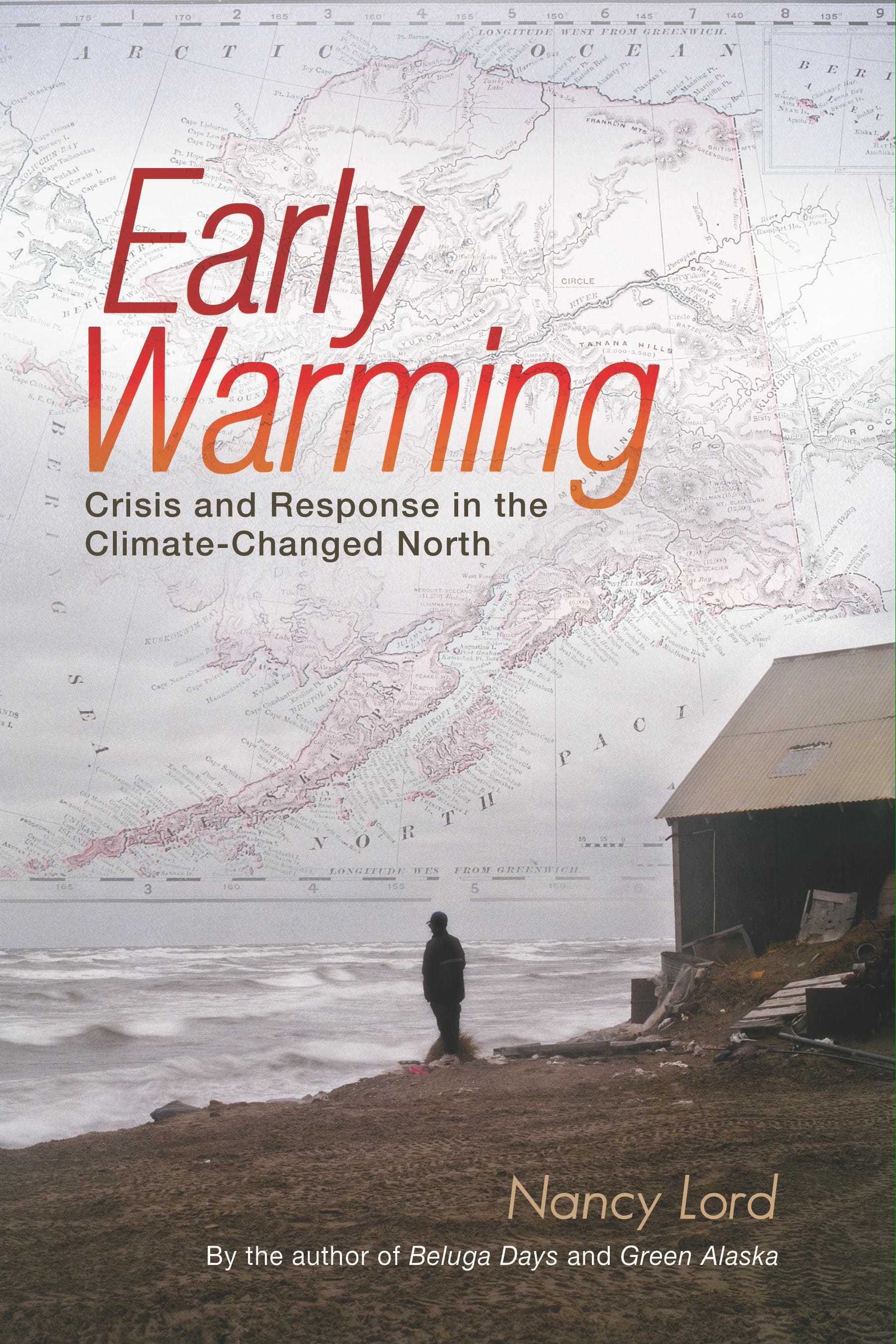
NW: In your book, Early Warming, you discuss themes of resilience and adaptation. What changes have you noticed in almost 15 years since that book was published? How do you see climate change affecting Alaska and the Canadian northwest, specifically?
NL: I focused a lot on Alaska Native communities and what I actually found was an attitude that we’ve always been adaptive…There wasn’t a sense of urgency…There was actually a lot of resistance I ran into when I talked about climate change, and this was years ago, when I wrote it, so it’s probably a little different now, but people didn’t want to make a distinction between weather and climate. They were happy to talk about the weather, but once you said ‘climate change’ or ‘global warming,’ they were like, ‘Oh, you know, I’m not interested.’
The biggest thing happening in Alaska [resulted from] two back-to-back storms that we had. The big typhoon [from Japan] pretty much eliminated one entire village of 600 people. Ninety percent of the housing was destroyed. I wrote about it in my book; there’s a whole chapter about Shishmaref, which is one of the villages that was trying to move to higher ground, and they’ve been trying to do that for probably 30 years, and basically nothing has happened. Recently, another community got it together a little better and did move the whole village up higher, but there are too many villages that are all in western Alaska, right at sea level. They can’t all move. The government is spending a lot of money bringing in big boulders to try to fortify the shorelines, but none of that is going to work. So I guess that’s how communities are trying to respond at this point, but none of it is adequate. What’s going to happen is people are just going to leave. A lot of those people were from the two villages that were really hit hard, and they were moved into the regional community of Bethel, then airlifted to Anchorage. So they’ve got 1,000 people that have been moved to Anchorage, and in temporary shelters, and now they’ve been moved into hotel rooms and so on. They’re not going to go back, most of them, so they’re going to end up in Anchorage, or they’re going to diffuse into the rest of Alaska, and lose their culture. That’s the big thing that’s happening for Alaska with climate change. It costs in excess of a million dollars per household, which is crazy. That’s just not sustainable.
I think we’re headed for a major disaster. I’ve been following this Bill Gates stuff, where he said we’ve been worrying too much about climate change and that we need to worry about other issues. It’s all one. It’s the climate crisis that’s causing mass migrations, failures of farmlands, hunger, and wars. So much of it comes down to climate issues, and unless we deal with them, people are just going to be homeless and desperate. I think he’s done a lot of harm to the movement. I get my boosts of encouragement from Bill McKibben, who’s been at this forever. I read his newsletters, and he’s always got something positive that we can do. He never gives up, so he’s an inspiration to me. Kathleen Dean Moore has written a lot about finding ways to be involved and find joy in the world. Something that Kathy says all the time is that when you’re feeling alone, when people ask, ‘What can one person do?’ She says, ‘Don’t be one person, join up.’ So, I try to do that, try to be involved with organizations and other people joining together.
To follow Lord and her work, check out her website for updates.
Great interview, Nicole!!! I recall a professor of mine referred to changes in the high latitudes as a "canary in the coal mine". It's fascinating to hear the local attitudes, and the policy that is supported as a result of those beliefs, in a place that is experiencing the most dramatic change. I love the way this post highlights interconnectedness... between systems, and among people.